





IN the late 1700s and early 1800's Ayrshire folk lived in fear of the resurrectionists.
Also known as bodysnatchers, they would visit the graves of the recently interred at night, remove the fresh corpses and sell them to surgeons or medical students.
It was a lucrative trade and a dangerous one. However, robbing bodies from graves was not illegal - just regarded as abhorrent by most.
Yet is was worth it to those involved, as they could sell each body for £10 - which would now be closer to £1,290.
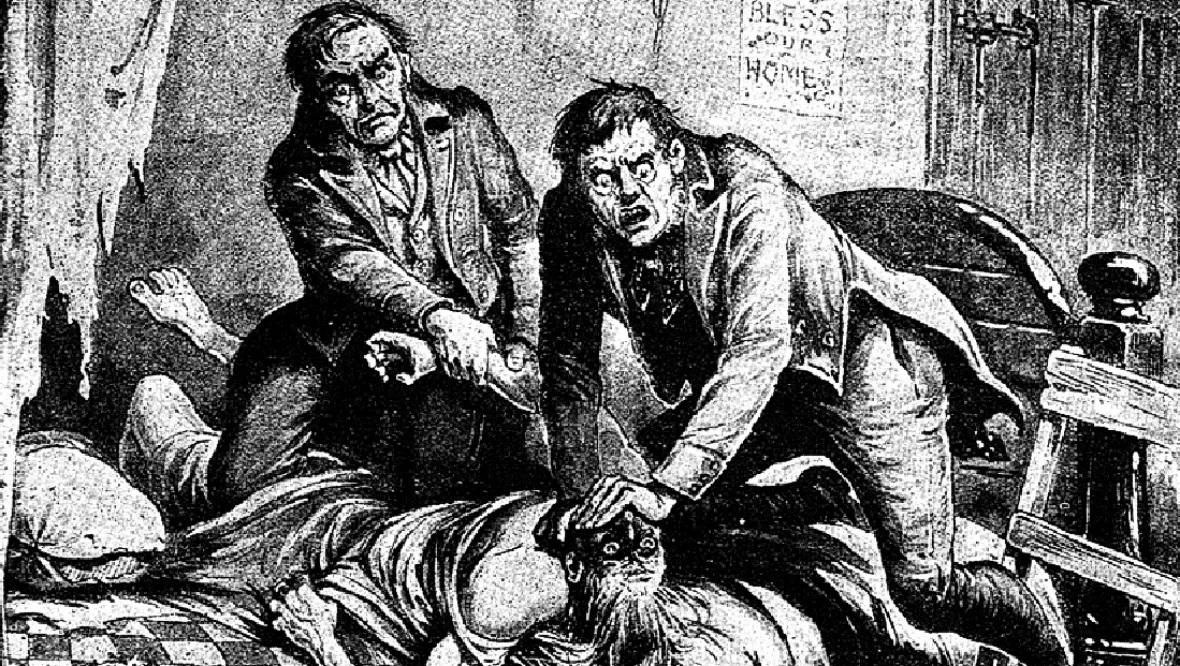
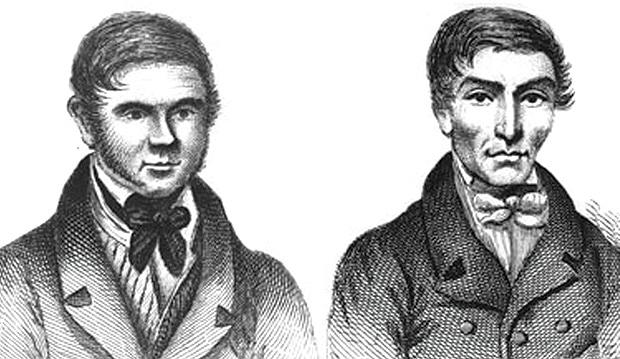
The most famous resurrectionists were William Burke and William Hare - who not only robbed graves in Edinburgh but murdered 16 people over 10 months to maximise their profits.

They sold the corpses to Edinburgh surgeon Robert Knox for dissection at his anatomy lectures and the judge at their trial was an Irvine man, Lord David Boyle.
Hare gave evidence against Burke, claiming he was responsible for the murders. He would serve a prison term - mostly for his own protection - before being escorted to the English border and told not to come back.
Burke was sentenced to death.
Delivering his verdict, Lord Boyle told him: "Your body should be publicly dissected and anatomized.
"And I trust, that if it is ever customary to preserve skeletons, yours will be preserved, in order that posterity may keep in remembrance your atrocious crimes."

Burke was hanged in front of a crowd estimated at 25,000 in early 1829, and his body was indeed dissected by Professor Munro in Edinburgh University's anatomy theatre.
Tickets for the event were sold and the police had to be called out after a mob tried to gain entry to the gruesome spectacle. His skeleton was gifted to the anatomical museum at Edinburgh Medical School where it still remains.
A book alleged to be bound with his tanned skin is on display at Surgeon's Hall Museum.
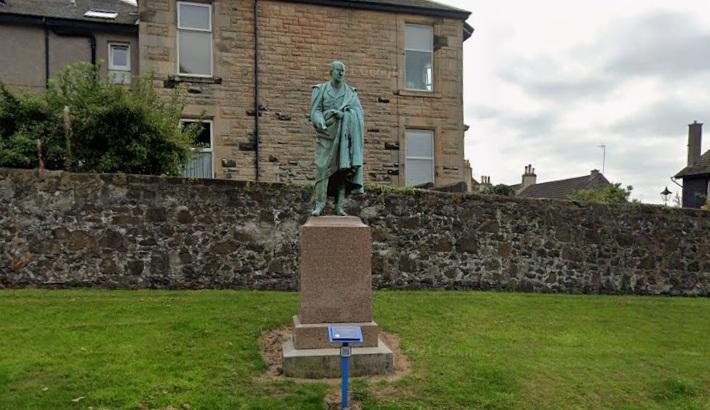
Judge Boyle, who would become Lord Justice General in 1841, was interred in Irvine's Old Parish Church after his death 1853. A statue to him still stands in the town's Castle Street.
Ironically, he is buried in the same kirkyard as another resurrectionist - this one a doctor and a founding member of Irvine Burns Club..
John Fletcher was born in 1798 and was considered a prodigal talent.
He was Irvine's surgeon by the age of 22 and considered a pillar of the community. But by the age of 28, his high position in society went down in flames.

Noticing the number of disinterred bodies at the kirkyard, Irvine officials set a trap. They laid coins under the turf of new graves to check if they were still there the following day.
The trap worked. Fletcher was named alongside James Wilson, who was responsible for the kirkyard, Glasgow carter Robert Stein and butcher William Anderson.
As bodysnatching was not a crime Fletcher could not be prosecuted. Instead, he fled Irvine and move to Ayr, where he died just four years later at the age of 32.

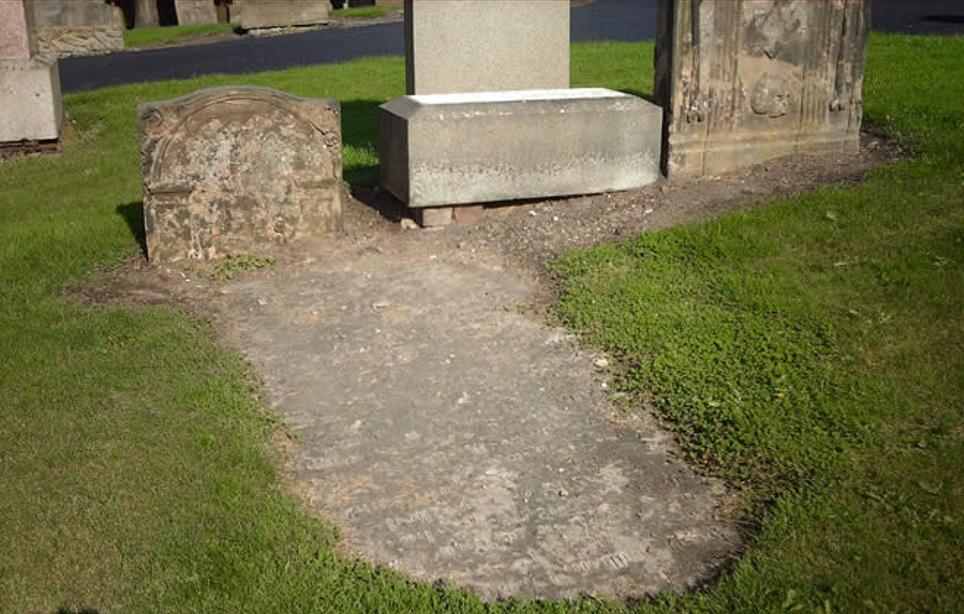
He was buried in the very same graveyard he plundered. His grave and marker can still be seen in the Old Parish kirkyard - undisturbed over the years as far as we can ascertain.
The resurrectionist scare covered other parts of Ayrshire too. Many cemeteries have examples what was known as a 'mortstone' or 'resurrection stone' - a coffin-shaped slab usually over 7-8 inches thick.

It would be be placed over the top of the grave immediately after burial and remain there until the corpse decomposed enough to no longer be of interest to the bodysnatchers.
One of the finest surviving examples lies in St Nicholas Church in Prestwick. The metal straps and iron lifting hooks remain intact. Another mortstone can be found in Kilmaurs.
In Largs, stones from the demolished parish church were used to build a higher wall to keep out the resurrectionists in 1802
While the kirk had gone, the graves remained - including the still impressive Skelmorlie Aisle, built by landowner Sir Robert Mongomerie following the death of his wife Margaret.
The age of the resurrectionists finally came to an end in 1832 with the passing of the Anatomy Act in Scotland which gave surgeons free licence to dissect donated bodies.


Share