


Commanche Run will forever be remembered for providing a lasting reminder of the brilliance of Lester Piggott in the saddle but the 1984 St Leger also demonstrated the legendary jockey’s ruthlessness out of it.
Piggott’s unique ability undoubtedly played a huge part in landing the final Classic of the 1984 season for Newmarket trainer Luca Cumani, the jockey delivering on the horse with a winning blend of pace judgement, rhythm and power to deny Baynoun and Steve Cauthen by a head.
It was a race which delivered not only an eighth and final win in the race for the most celebrated jockey of his generation, but also a 28th British Classic which saw him finally eclipse the record of 27 wins by Frank Buckle between 1792 and 1827.
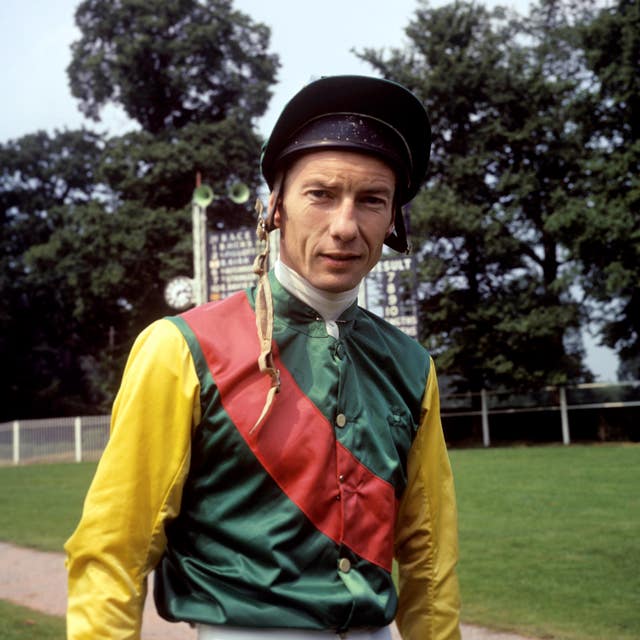
It was also a story filled with sliding doors moments given it might not have been a record-breaking win for Piggott, but a first Classic for Cumani’s stable jockey, American Darrel McHargue.
McHargue was Commanche Run’s regular rider, but after Piggott deputised for an impressive win in the Gordon Stakes at Goodwood when the American was suspended, the die was cast despite the stable jockey getting back on the colt to win his St Leger prep, again at Goodwood.
Cumani remembers Piggott, a close friend of owner Ivan Allan, could be persuasive and never more so than when the stakes were piled high.
“After he won the Gordon Stakes he was an obvious choice to go for the Leger and you could say Lester made representations to Ivan Allan to ride him. I would call it more like arm-twisting,” said Cumani.
“Lester and Ivan were good friends and he had ridden horses for him all around the world. So you could say he was in a very strong position to twist his arm as well.
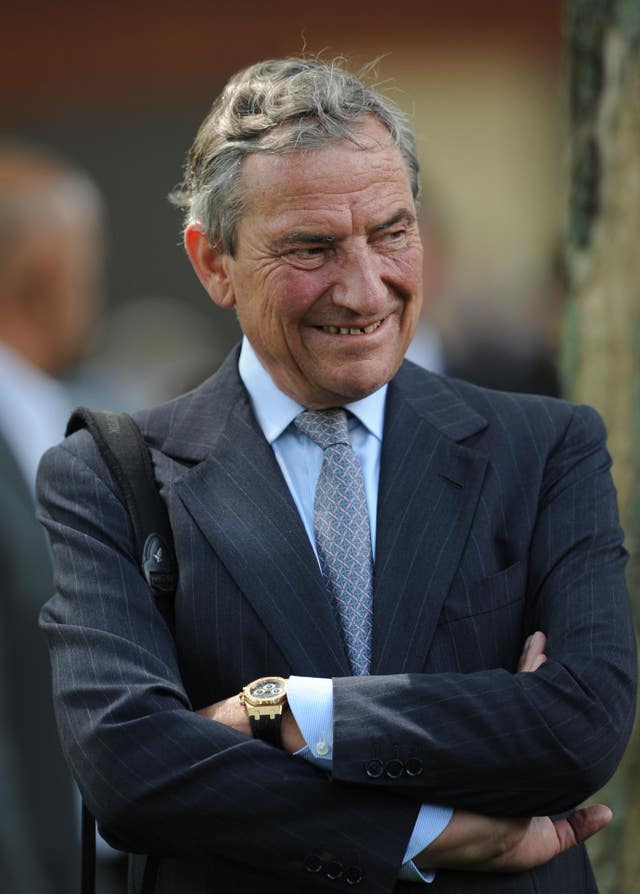
“There is the story that going up to Doncaster Lester was in the car reading the newspaper in which there’s an interview with Darrel which asked what he would be doing while Commanche Run was running in the Leger.
“Darrel was a really laid-back character and had told the interviewer, ‘Well I will probably go and play tennis’. Lester had read it out loud, peered at the front windscreen with the rain pouring down and said with his trademark mumble, ‘Well he won’t be doing that either, will he?’.
Commanche Run had nearly missed the race after stumbling and falling at Cumani’s Bedford Lodge yard in the days running up to Doncaster.
“He was warming up for exercise and grazed his knees which put his participation in real doubt,” recalled Cumani. “If the grazes bled the danger was that they were infected. If you got an infection in your knee, even it was superficial, if it got deeper the horse could be out for months.
“We had to work really hard on his knees to clean the infection out and get the swelling down.”
But after making the start line, Commanche Run proved both courageous and blessed. Under a strong ride from Piggott he took up the running entering the straight at Doncaster and stayed on under pressure to beat Baynoun with Alphabatim in third.
“I had always thought he was a potential Derby horse, but he had disappointed me earlier in the season. I think he turned the corner some time around Goodwood under Lester,” said Cumani.
“He made the running in the Gordon Stakes and it was a combination of the fact that he was beginning to be fully mature and the new tactic that transformed him. But he was always a horse with a very high cruising speed and stayed very well then as a three-year-old.”
Commanche Run had an even more remarkable transition in his locker the following year when stepping back in trip from the Leger to win the Brigadier Gerard Stakes and both the Benson & Hedges Gold Cup (now Juddmonte International) and Irish Champion Stakes over 10 furlongs.
“He reinvented himself as a mile-and-a-quarter horse,” said Cumani. “That was to do with maturity because he just wasn’t strong enough for Group Ones as a three-year-old. Obviously as he developed more strength he developed the ability to run at higher speeds.
“Lester, to give him credit, reinvented him as a front-runner and that also made the change.”


Share